
More and more couples arrive at our first call saying the same thing: I want my photographs to look like film. In 2027, analog photography is not nostalgia, it is a conscious choice. This is an honest guide to how it works at a wedding, written by someone who shoots it.

Why film is back
For the skin, the colour and the patience. Film has a way of rendering skin tones and high contrast that is hard to imitate. And it makes you shoot with intent: every roll has a limited number of frames, so each one is considered. The 2027 forecasts agree that grain and imperfection are part of the appeal.
Film and digital, together
Almost no photographer covers a whole wedding on film alone. The usual approach is hybrid: digital for the ceremony, the fast moments and the party, and film for portraits, getting ready and the couple session. You get the security of digital and the texture of film where it shines most.
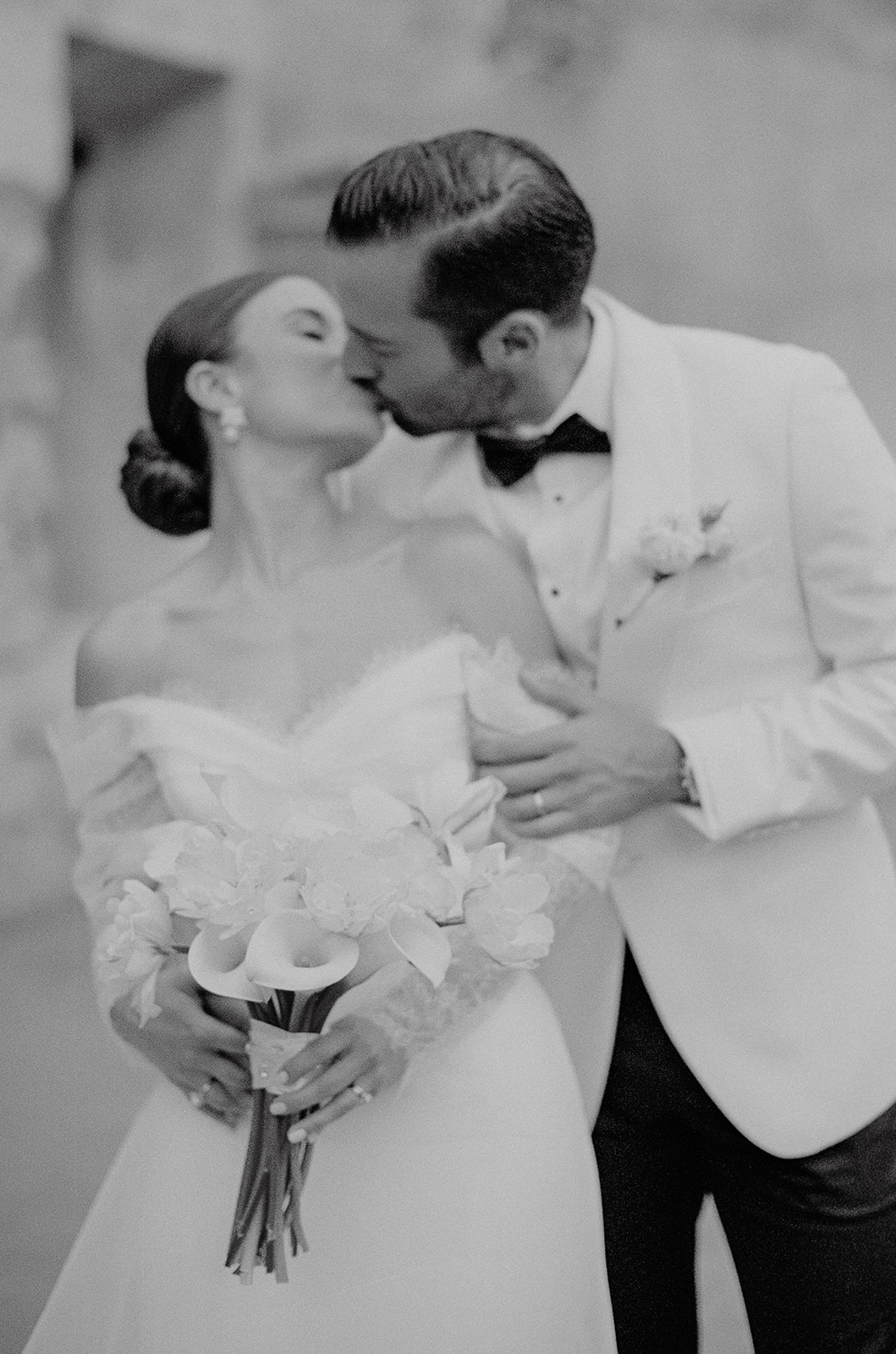
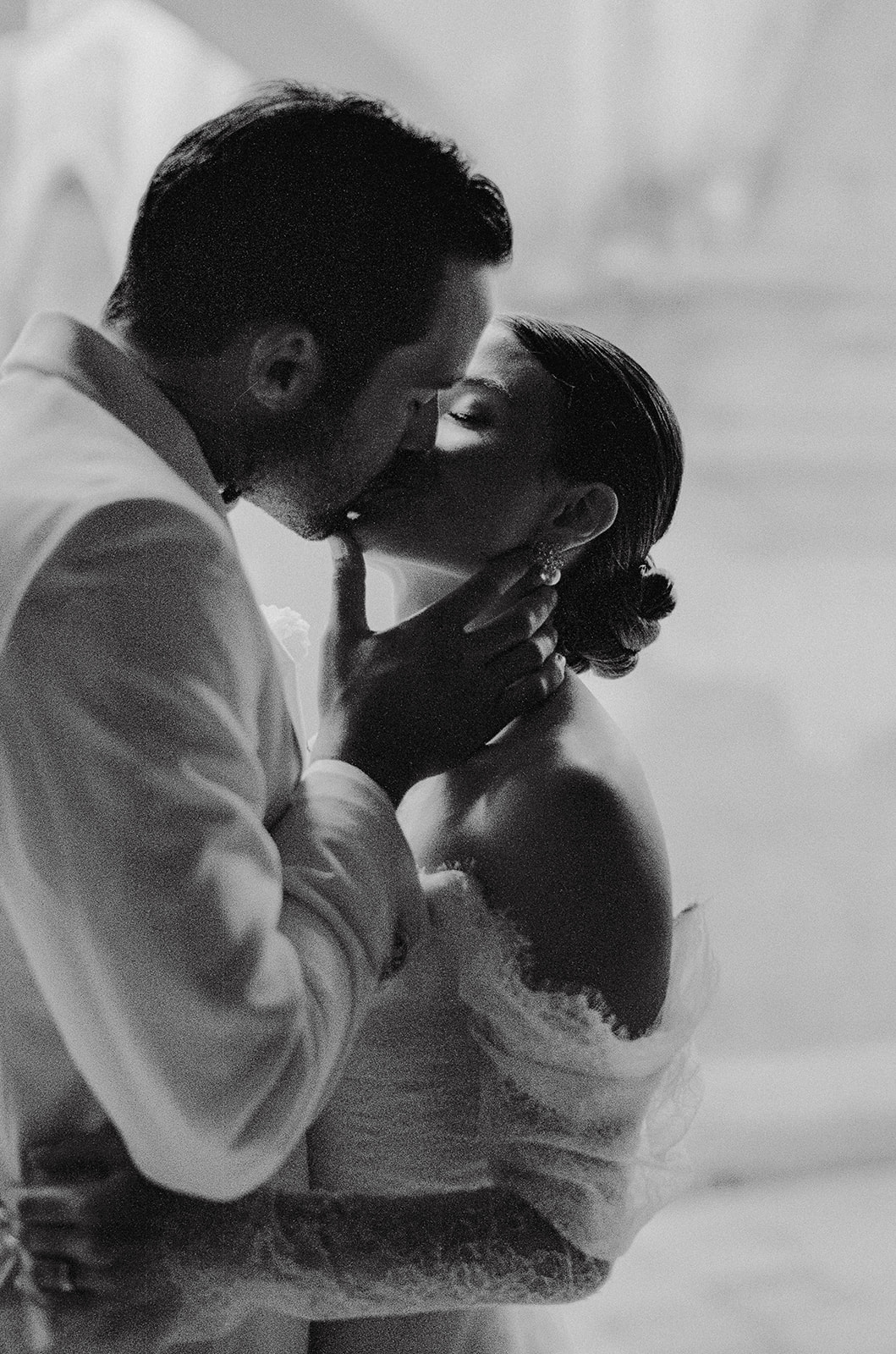
The film stocks most used
- Kodak Portra 400: the wedding workhorse. Soft colour and natural skin.
- Kodak Portra 800: for low light and interiors.
- Black and white stocks such as Ilford HP5: visible grain and plenty of character.
- 35 mm (36 frames per roll) or medium format (10 to 16 frames per roll, with more detail).
What to expect in your gallery
- Fewer film frames than digital ones: that is normal, and part of the charm.
- Rolls are developed and scanned by a lab, so film delivery can take a little longer.
- You do not see the photographs on the day. You trust your photographer.
- The best film frames come from good light: a window, open shade or sunset.
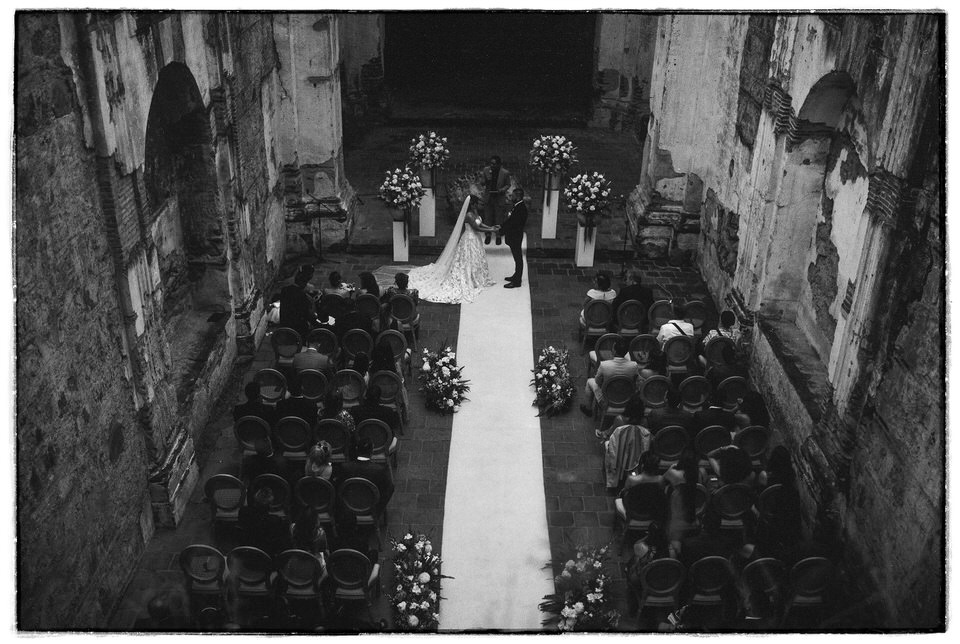
The best moments for film
Getting ready by a window, the bride’s portrait, the couple session at sunset, the details and a few family portraits. For a ceremony in a dark church, or the party, digital is usually the better tool.
What to ask your photographer
- How many rolls are included, and when will you use them?
- Who develops and scans, and how long does it take?
- What happens if a roll fails?
- Can I see a full wedding shot on film?
These questions matter because, as some photographers point out, film is sometimes marketed more than it is actually used on the day.
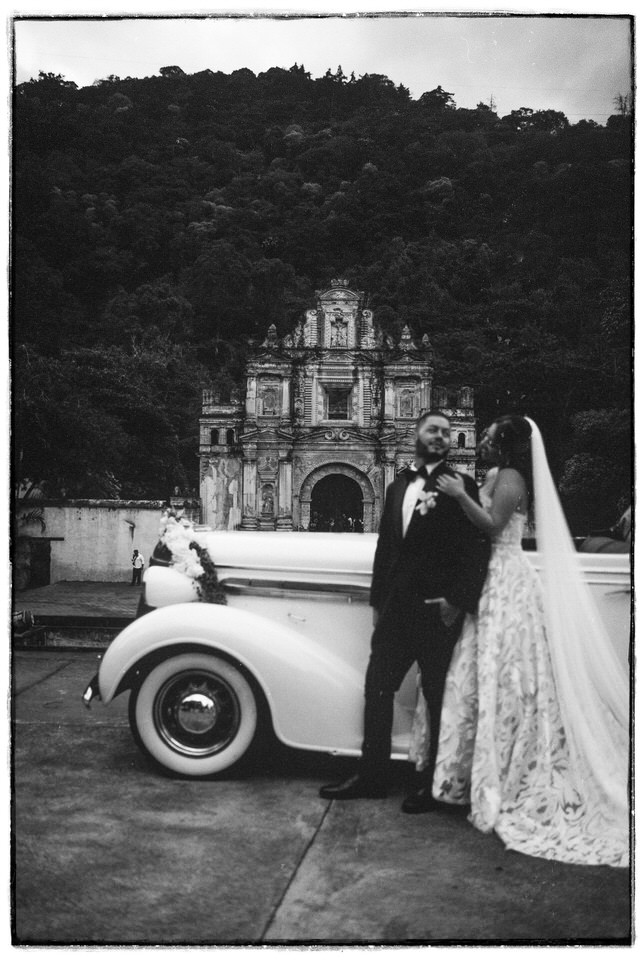
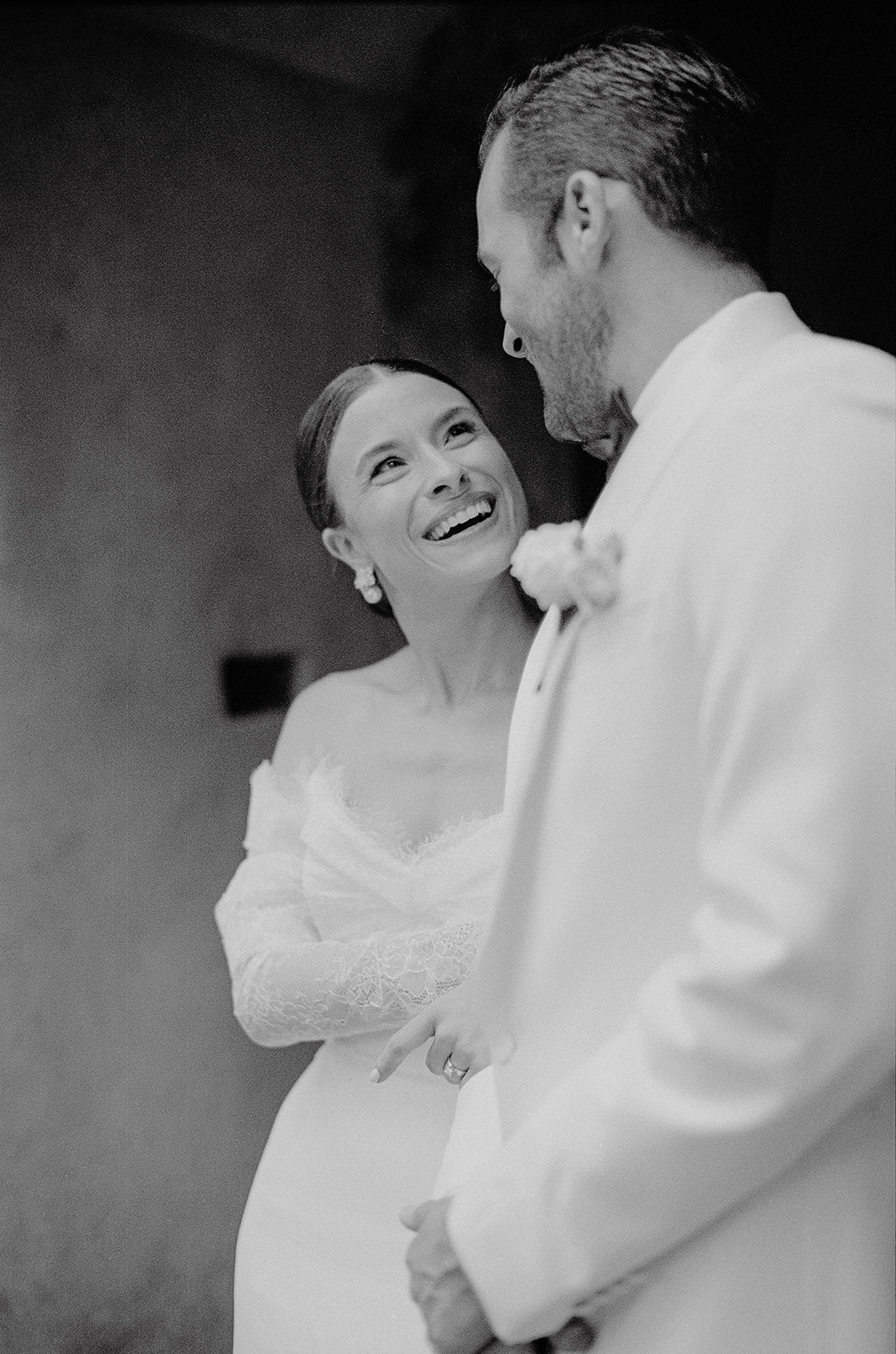
How I work with film
Analog photography is part of my personal work, and I offer it as an addition to weddings and sessions. The film photography page explains how it works and what is included.
Sources
Would you like part of your wedding on film? Write to me and I will explain how we combine it with the rest of the day.


